If you have ever wasted a Saturday driving store to store only to find the “deal” was gone, misplaced, or never real, a Clearance Sourcing Software Free Trial can feel like the obvious fix. For a frugal small business owner, that problem is not just annoying, it is expensive because time and cash flow are always tight.
Deal Soldier is built around a simple promise: curated clearance intel from major retailers (think Walmart, Target, Home Depot, and Lowe’s), packaged as alerts and beginner-friendly guidance so you can act quickly and buy with confidence. Instead of scrolling endless social posts or chasing screenshots, you get a more structured path that fits real procurement schedules.
In this guide, I’ll walk you through what’s actually happening behind the scenes, how to read and act on alerts without getting burned, and how to decide if the 7-day trial makes sense for your household, your side hustle, or your business sourcing routine.
Learn more about Deal Soldier and start with the free trial
Ready to test it without commitment? Start a Deal Soldier free trial and see if the alerts match what you actually buy.
Key Takeaways
- Hidden clearance is real, but inconsistent: It often shows up when shelf tags lag behind system markdowns, so verification matters.
- A Clearance Sourcing Software Free Trial should prove speed: The win is early, actionable alerts, not a massive list you cannot use.
- Verification is your risk reducer: The best workflows cross-check item, store, and timing before you drive.
- Beginner support is a profit lever: Simple guidance can prevent the most common mistakes like chasing dead inventory.
- The right tool depends on your goal: Business procurement, family savings, and retail arbitrage each need different alert filters.

Unveiling Clearance Sourcing Software Free Trial: What Sets Deal Soldier Apart
The difference between “free deal info” and a useful free trial clearance sourcing software experience is curation plus context. Most shoppers are not short on deals. They are short on time, clarity, and confidence.
Deal Soldier positions itself as a subscription service that focuses on hidden clearance at major retailers, then delivers that intel through alerts and guides. The practical value for a small business owner or procurement manager is straightforward: fewer hours spent searching, fewer wasted trips, and fewer “we should’ve bought it yesterday” moments.
Why “hidden clearance” feels exclusive (even when it is not magical)
Hidden clearance is usually not a secret coupon. It is a mismatch between what you see on the shelf and what the system rings up at. That mismatch is why two shoppers in the same aisle can have totally different outcomes depending on whether they scan and verify.
A common scenario is a budget-conscious family shopper who sees a regular shelf tag, assumes the price is the price, and walks away. Meanwhile, someone scanning with the right info sees the markdown and buys before it gets re-tagged.
Deal Soldier’s angle is to help you show up with a clearer plan, not just excitement. In practice, that means focusing on deals with actionable details, and pairing them with beginner-friendly guidance so new users are not overwhelmed.
To get started, most people jump in from one place and keep it simple: try Deal Soldier here.

How Clearance Sourcing Software Works: Behind the Scenes of Deal Soldier’s Deal Verification
If you are asking how clearance sourcing software works, the honest answer is that the “software” is only half the story, the workflow is the other half. The best services combine scouting, validation, and communication so users can act fast.
Even without seeing every internal step, you can judge verification quality by whether alerts include enough detail to confirm a deal before you buy: item identifiers (UPC/SKU), the retailer, the type of markdown (clearance, rollback, hidden), and any timing notes.
The verification mindset: prove it before you drive
Hidden clearance is notorious for being inconsistent by store. Inventory can be wrong, items can be in carts, or the last unit can be sitting in a random clearance end cap. BrickSeek’s own guidance highlights real-world reasons you might not find an item exactly where you expect and recommends double-checking UPCs and asking for a scan when appropriate. (That kind of reality check is useful no matter what service you use.)
Here is a practical “verification loop” you can apply to Deal Soldier alerts:
- Match the exact product by UPC/SKU, not just a photo that looks similar.
- Confirm store-specific pricing as close to departure time as possible.
- Plan your route based on likelihood, not hope. If you have one store showing low stock, pair it with a second store nearby.
- Scan on arrival before you commit to quantity, especially for business buys.
This is where a Clearance Sourcing Software Free Trial should shine. You are not only evaluating deal volume. You are evaluating whether the alerts consistently include what you need to verify quickly.
For additional background on why clearance can be “there but not there,” BrickSeek’s explainer is a solid reference: BrickSeek Basics.

Deal Soldier Clearance Alerts Review: Real User Experiences and Reliability
A deal soldier clearance alerts review that actually helps you decide should focus on reliability signals, not hype. Reliability looks like: consistent alert formatting, clear item details, and predictable categories that match your goals.
If you are a frugal small business owner, the “best” alert is often boring. It is toner, cleaning supplies, basic tools, storage, breakroom items, and durable equipment you would have bought anyway. For a first-time homeowner DIY enthusiast, it may be fasteners, paint accessories, and tool batteries. For a savvy deal hunter, it might be brand-name items with strong resale demand.
What users tend to value during a free trial
In our experience, free-trial users decide quickly based on three moments:
- The first successful verification: scanning in-store and seeing the lower price is the trust-builder.
- The first avoided time sink: skipping a store run because the alert included enough detail to realize it was not worth it.
- The first “repeatable” category: finding a deal type that fits your routine, like weekly office supply replenishment.
At the same time, it is fair to be skeptical. Clearance is not guaranteed inventory. Any service that implies “always available” is setting you up for frustration.
That is why the best approach is to use the trial as a test of alert quality over alert quantity, and to lean on support and guides when you are brand new.
If you want to explore the trial details and see whether it fits your shopping style, start here: Deal Soldier on Whop.

Case Study: How a Small Business Saved Hundreds Using Deal Soldier’s Clearance Sourcing Software Free Trial
The easiest way to judge a Clearance Sourcing Software Free Trial is to measure it against purchases you already planned to make. So here is a realistic case study based on what small operators typically buy, and how the workflow can translate into savings.
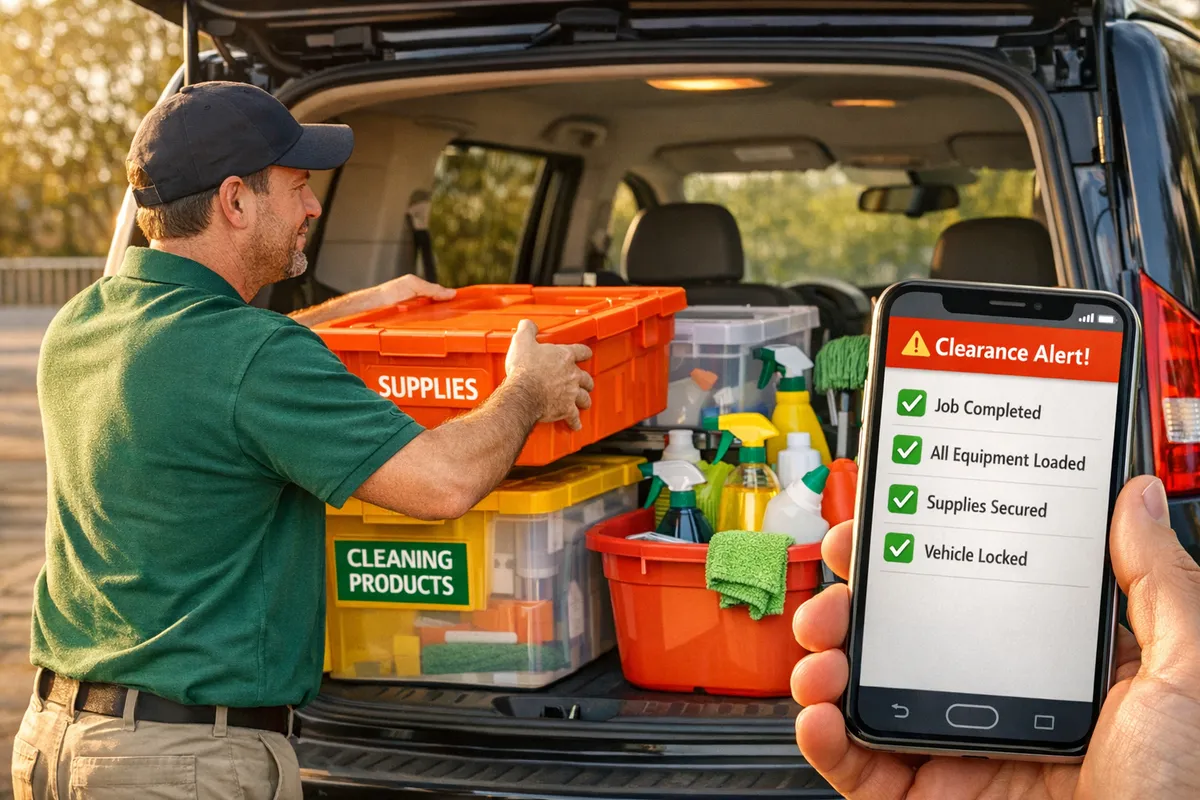
Let’s use “Mina,” who runs a small cleaning and maintenance service with two part-time employees. Her monthly spend swings wildly when supplies spike, and she hates paying full price for consumables. Mina is intermediate with deals, she has tried free forums, but she cannot monitor them all day.
Mina’s 7-day trial game plan (and the results)
Mina set one rule for the week: only buy items that fit her normal procurement list. She used alerts to target three categories: shop towels and gloves, storage bins for organizing a supply closet, and a backup cordless tool set for her crew.
What changed during the trial was not that Mina suddenly found “unicorn” products. It was that she worked faster:
- She treated alerts like a lead, not a promise, and verified before driving.
- She planned two store stops right after a service job, which reduced extra driving.
- She bought deeper on the best-fit items (consumables) and avoided tying up cash in random clearance.
In one week, Mina spent about $420 on items she would likely purchase over the next month anyway, but paid roughly $260, saving about $160. The bigger win was avoiding a separate weekend sourcing trip, which she values even more than the dollar savings.
This is why the “software” part matters less than the system. Deal Soldier helps by delivering curated leads, but the savings are unlocked when you apply repeatable verification habits.
If you want to replicate Mina’s approach, start the same way she did, with the trial: start Deal Soldier here.
Exclusive Clearance Deals Software: Why Free Trial Users Find Value Beyond Marketing Hype
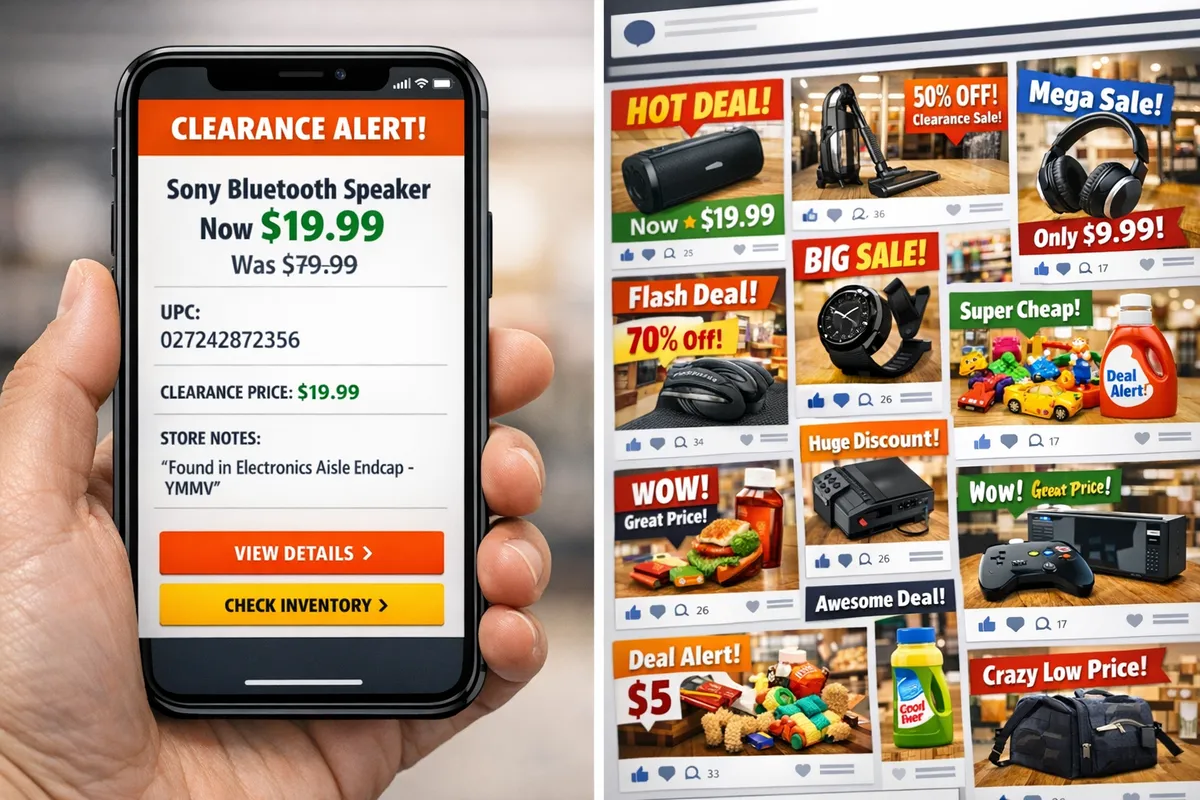
The fastest way to spot marketing hype is to ask, “Does this help me make fewer mistakes?” With exclusive clearance deals software, “exclusive” often means curated, not magically unavailable elsewhere.
Here is the reality: plenty of deals are shared in free groups, on Telegram, or in random social posts. The problem is signal-to-noise. You might scroll 200 messages to find one deal that fits your budget, your location, and your needs, then still miss it because there is no verification context.
What “exclusive” can honestly mean in clearance
A service can create exclusivity in a few practical ways:
- Speed and packaging: the same underlying markdown can be found by others, but you get it sooner and in a usable format.
- Better filtering: categories and retailer focus can align to your business or household needs.
- Guidance and support: fewer newbie errors like chasing the wrong UPC, misunderstanding variants, or buying too deep.
If you are a savvy deal hunter comparing options like Tactical Arbitrage, Tactical Arbitrage free trial, ArbiSource free trial, or other online arbitrage sourcing software, it helps to separate online sourcing from in-store clearance reality. Tools built for online flips are not always optimized for hidden in-store markdown behavior.
One more trust angle: genuine savings should not rely on misleading “compare at” games. The FTC’s Guides Against Deceptive Pricing outline how former-price comparisons can mislead shoppers when not used correctly. If you are evaluating any deal source, keep that consumer protection mindset. Reference: 16 CFR Part 233, Guides Against Deceptive Pricing.
Maximizing Your Experience with the Best Clearance Deal Finder Free Trial
The best clearance deal finder free trial is the one you treat like a short sprint, not a casual browse. Seven days is plenty of time to answer the real question: “Will this make my sourcing faster and more predictable?”
Instead of waiting for the perfect deal, build a simple routine that matches your persona.
A 3-part routine that works for business, families, and resellers
- Pick your lanes on day 1: choose 2 to 3 categories you actually buy. For a small business, that might be office supplies and tools. For a family, it might be household essentials. For retail arbitrage, pick one consistent category so you can learn patterns.
- Schedule two short check-ins daily: one in the morning, one mid-afternoon. This reduces alert overload and keeps you responsive.
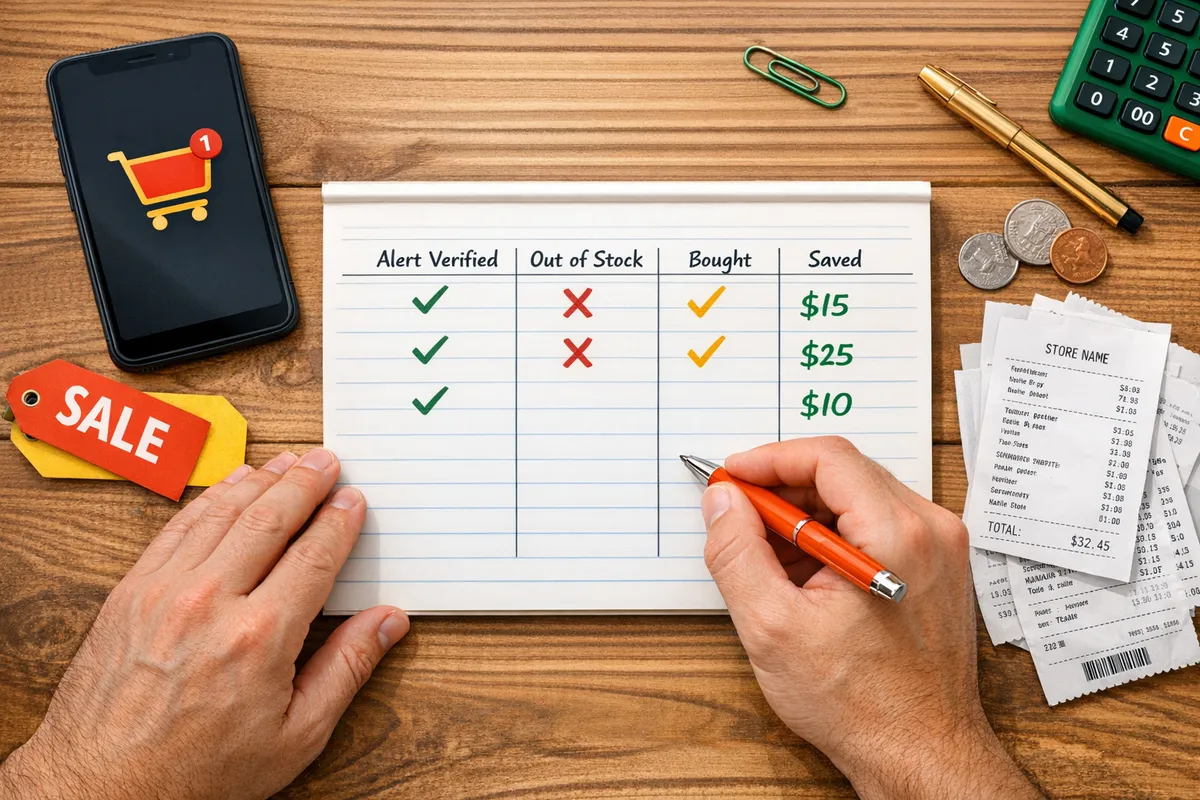
- Log outcomes, not just wins: track “verified but out of stock,” “wrong variant,” and “successful purchase.” Those notes tell you whether the alerts are actionable in your area.
If your goal includes reselling, be realistic about platform rules. Amazon’s own reselling guidance acknowledges retail arbitrage as a concept and emphasizes following selling guidelines and keeping documentation. It is a helpful baseline read if you are considering a Retail Arbitrage Software Free Trial or any sourcing approach tied to marketplace selling: Amazon’s reselling guidelines and tips.
A final practical tip: set a cash limit for the week. Free trials can tempt you into buying things you do not need, which kills ROI.
Common Questions About Clearance Sourcing Software Free Trial
If you are skeptical, that is healthy, a Clearance Sourcing Software Free Trial should stand up to real questions. Most objections boil down to three concerns: deal availability, relevance, and whether you are paying for information you could find for free.
First, availability is always store-dependent. Clearance is messy. The goal is not perfection, it is better odds and faster decisions.
Second, relevance is about how you set up your lanes. If you try to follow everything, it will feel noisy. If you focus on what you actually buy, it becomes useful.
Third, “free vs paid” is really “time vs structure.” Free sources can work great if you enjoy the hunt and have time to monitor them. Paid services earn their keep when they reduce your searching time and help you avoid rookie mistakes.
If you are brand new, the support factor matters. Being able to ask, “Am I reading this alert right?” or “Which UPC variant is the deal?” can be the difference between a confident purchase and a wasted trip.
To explore the offer and decide for yourself, the simplest next step is to look at the trial entry point: Deal Soldier free trial access.

Take Action: Start Your Deal Soldier Clearance Sourcing Software Free Trial Today
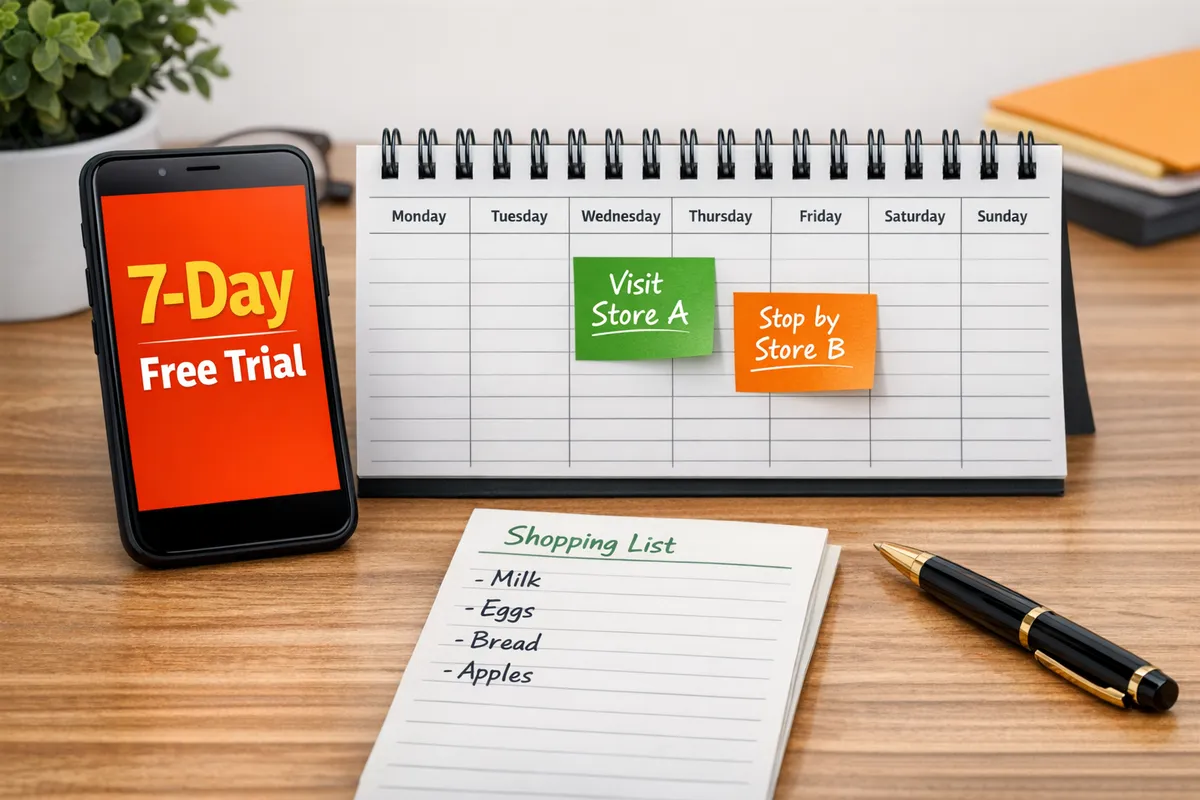
If you want proof, the fastest proof is one verified in-store win during your trial week. That is why Deal Soldier’s 7-day trial is useful. It gives you enough time to test alerts across at least two retailers and build a repeatable verification habit.
Here is a simple action plan you can complete in under 30 minutes today:
- Start the trial and set a goal: “Save $50 on items I already buy,” or “Find 10 verified markdowns.”
- Choose two retailers you can realistically visit this week.
- Decide your buy list (business supplies, household essentials, or a resale category) and stick to it.
If you want to keep everything in one place while you test, use the same link for access, updates, and support: join Deal Soldier here.
Want curated alerts without a long commitment? Start your Deal Soldier Clearance Sourcing Software Free Trial and cancel anytime if it is not a fit.
Frequently Asked Questions About Clearance Sourcing Software Free Trials
How much does ArbiSource cost?
ArbiSource pricing can change and may vary by plan, so the most accurate answer is whatever ArbiSource lists on its official site at the time you are reading. If you are comparing tools, focus on what you are buying: some products are built for online sourcing workflows, while Deal Soldier is positioned around hidden clearance alerts and guidance. The right choice depends on whether you need online arbitrage research or store-level clearance leads.
Is Amazon arbitrage legal?
Yes, retail arbitrage is generally legal in the US under the first-sale doctrine, but legality is not the same as marketplace permission. If you plan to resell on Amazon, you also need to follow Amazon’s rules for condition, authenticity, and documentation, and you can still face enforcement actions if you cannot prove sourcing. Amazon’s own overview of reselling and retail arbitrage is a good starting point for expectations. Read Amazon’s reselling guidance.
Is Amazon arbitrage worth it?
Amazon arbitrage can be worth it if your margins survive fees, returns, and compliance risk, and if you can source consistently. Many beginners only calculate the spread between buy price and sell price, then get surprised by storage fees, returns, and price drops. If your primary goal is saving money for your household or business, a Clearance Sourcing Software Free Trial might deliver faster “guaranteed value” because you are buying for use, not betting on resale.
What are the risks of using ArbiSource?
The biggest risks are bad data, bad assumptions, and bad compliance habits, not the tool itself. Any sourcing software can surface leads that change quickly, go out of stock, or have hidden costs like returns and shipping. For marketplace sellers, the risk also includes listing restrictions, authenticity complaints, and documentation requirements. Manage risk by starting small, verifying costs end to end, and keeping clean records of purchases.
Is there a Tactical Arbitrage free trial, and is it similar to Deal Soldier?
Tactical Arbitrage promotions and trial availability vary, so you should confirm on Tactical Arbitrage’s official pages. In terms of “similar,” Tactical Arbitrage is widely discussed as an online sourcing and analysis tool, while Deal Soldier focuses on curated clearance alerts and guidance for hidden markdowns at major retailers. If your goal is in-store hidden clearance, a Deal Soldier style workflow may feel more direct.
Your Next Steps With a Clearance Sourcing Software Free Trial
A Clearance Sourcing Software Free Trial is worth it when it turns deal hunting into a simple, repeatable process. Deal Soldier’s real value is not that clearance becomes “easy,” it is that you get curated leads plus a practical verification mindset you can use week after week.
If you are a small business owner, start with boring essentials and measure savings against what you would have bought anyway. If you are a family shopper, focus on household staples so the wins show up in your regular budget. If you are sourcing for resale, keep it tight, one category, clean documentation, and realistic margin math.
When you are ready to test it, commit to one week of structured check-ins and two planned store stops. One verified deal can erase a lot of skepticism, and a week of good alerts can save you hours long after the trial ends.
If you want to start now, here is the entry point again: Deal Soldier Clearance Sourcing Software Free Trial.